
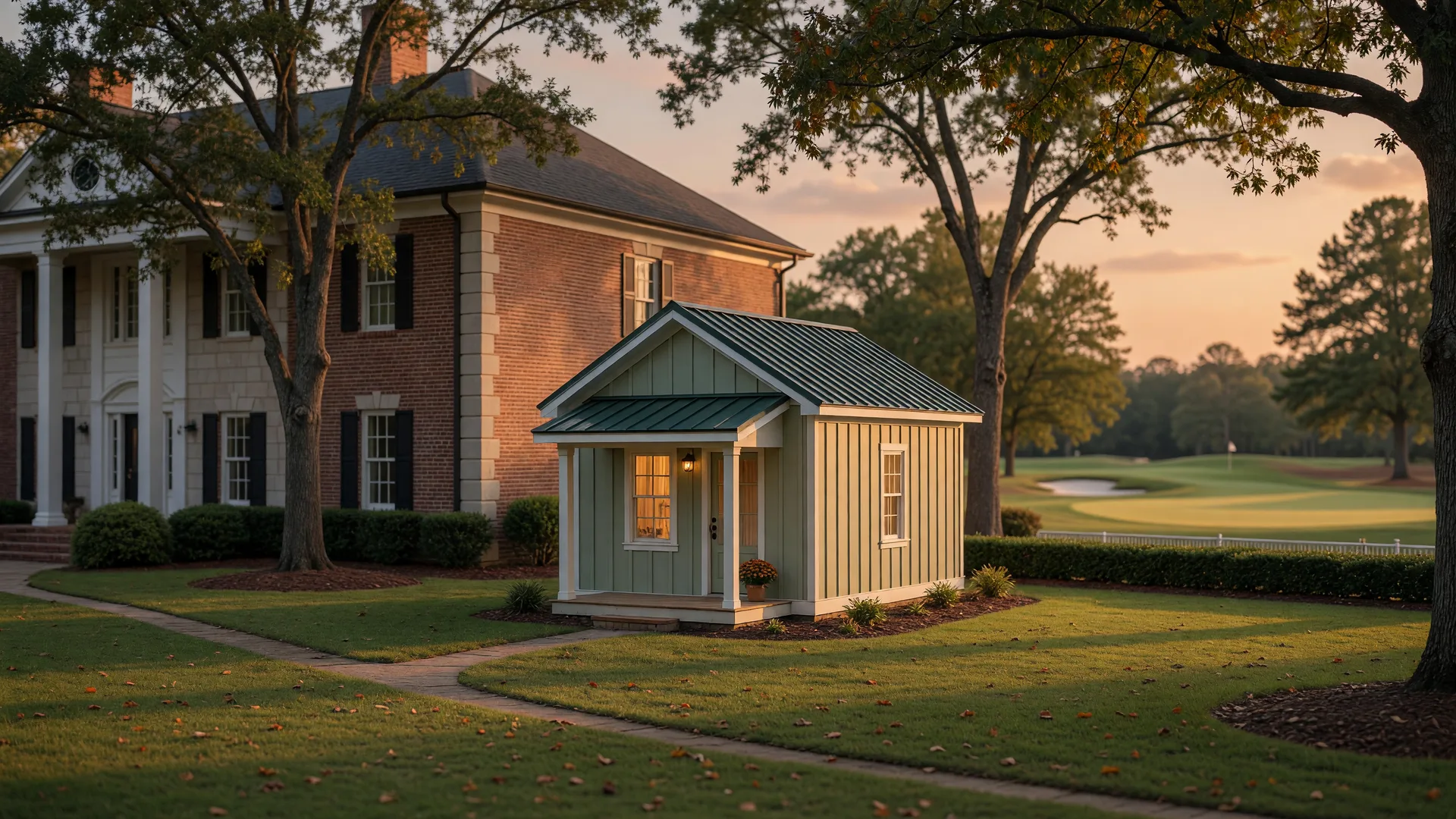
An accessory dwelling unit, or ADU, is a second, smaller living space on the same lot as a single-family home: a backyard cottage, a garage conversion, or an attached in-law suite. It has become one of the hottest consumer real estate searches of 2026 because it answers three pressing questions at once, how to house aging parents, how to make a mortgage more affordable, and how to add usable square footage without moving.
Searches for "granny pods" jumped roughly 311% year over year to about 27,100 monthly searches, and Zillow's search data names flexible spaces like ADUs among the fastest-growing home-search terms. In Georgia, the rules are local, the costs are real, and the payoff depends on your lot, your HOA, and your county. As a luxury real estate specialist with 19 years of experience in Apalachee Farms, I get asked about backyard cottages more each month. Here is the full picture for homeowners in Northeast Metro Atlanta.
Why Are Backyard Cottages Trending So Hard in 2026?
Three forces are pushing ADUs into the mainstream. First, affordability: with today's mortgage rates and home prices, more families are looking for ways to make one property work harder, renting a cottage, housing a relative, or offsetting a payment. Second, demographics: boomers want to age near family, and adult children want independence without a six-figure rent bill. Third, finance: homeowners now sit on record equity, roughly $35.8 trillion nationally, and lenders report growing interest in using that equity to fund ADU construction.
The search data is striking. "Granny pod" searches grew about 311% year over year, and terms like backyard cottage, accessory dwelling, and in-law suite are all climbing. Zillow's 2026 search analysis calls flexible and adaptable spaces one of the clearest signals in the market. In Northeast Metro Atlanta, where homeowners already value yard space, club amenities, and lifestyle, the same forces show up in daily conversations with buyers and sellers.
What has not kept pace is plain-English guidance on the rules. Georgia has no enacted statewide ADU law, so the answer to "can I build one" changes with your city, your county, and your subdivision. That is exactly what this guide covers.
"granny pod" searches
About 27,100 people a month now search for granny pods, and flexible-space searches like ADUs are among the fastest-growing terms on Zillow heading into 2026.
What Counts as an Accessory Dwelling Unit?
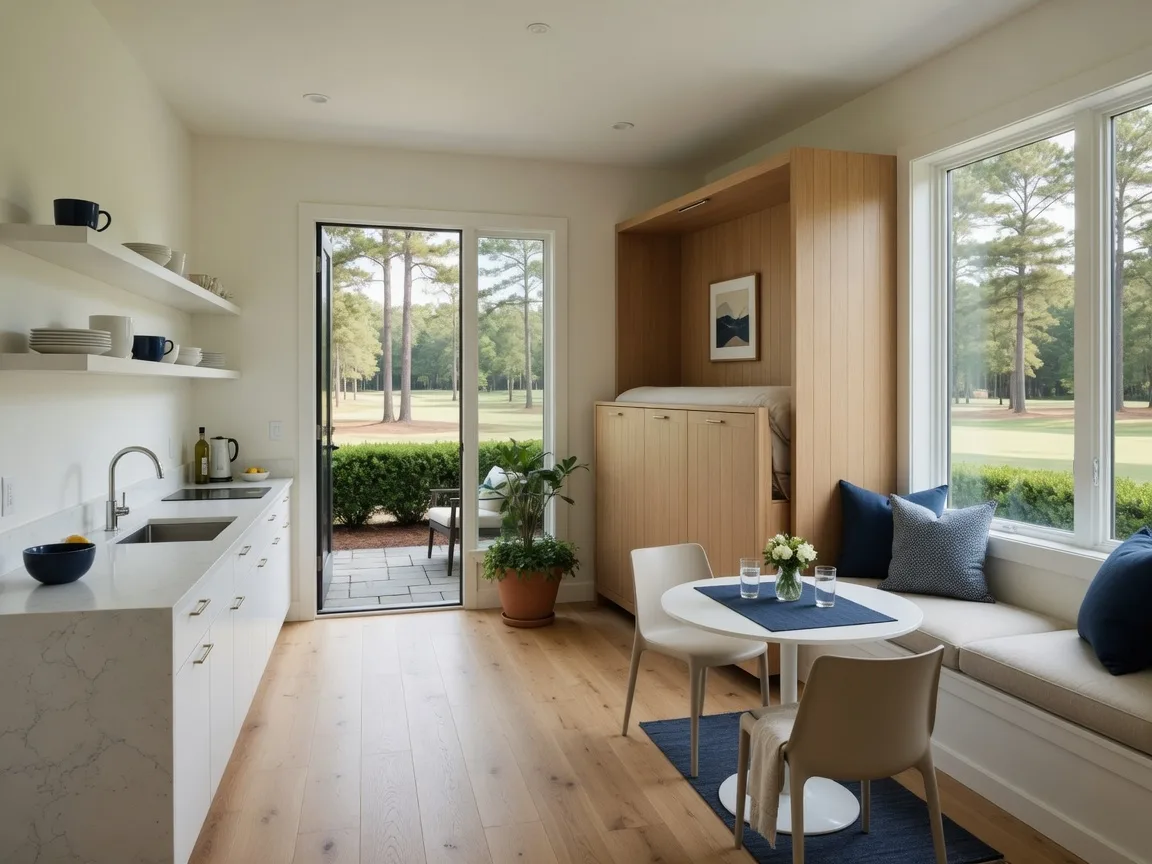
An ADU is a complete, self-contained living unit with its own kitchen, bathroom, and sleeping space, built on the same lot as (or attached to) a primary home. The three common forms are a detached backyard cottage, a garage or basement conversion, and an attached addition like an in-law suite. What makes an ADU different from a finished bonus room is that it is an independent dwelling: its own entrance, its own utilities, and the ability to function as a separate household.
For a unit to count as legal, approved living space, it has to be built to code under a real permit. A "finished" basement without a permit is not an ADU; it is unapproved habitable space that can create insurance and resale problems. Every legitimate ADU project starts and ends at the county or city permit counter.
Georgia Has No Statewide ADU Law Yet: Here Is the 2026 Status
As of this writing in late 2026, Georgia has not enacted a statewide accessory dwelling unit law, so local zoning governs every project. A proposed bill, HB 1166, would override local zoning to allow self-contained ADUs of 400 square feet or less without local zoning approval. It cleared the Georgia House on Crossover Day in March 2026 and has been pending in the Senate since, where its language has been under revision. Until and unless it becomes law, you cannot assume a cottage is allowed just because Georgia is considering statewide rules.
The practical takeaway: your project will be decided by your local ordinance and your HOA, not by the statehouse. In Northeast Metro Atlanta, that means one of two rulebooks, the Gwinnett County Unified Development Ordinance or your city's zoning resolution, plus the covenants of your neighborhood.
Gwinnett County ADU Rules: What the UDO Actually Says
In unincorporated Gwinnett County, accessory dwellings are governed by the Unified Development Ordinance. Section 230-120 states that accessory buildings may not be used for human habitation except as part of an approved accessory dwelling under Section 230-100, which means an ADU is allowed only where the county's Table of Permitted and Special Uses lists it as an approved use, and some residential districts still require a Special Use Permit.
Where an ADU is approved, Gwinnett's standards include: cumulative accessory building floor area may not exceed 50% of the principal dwelling's floor area, accessory buildings must sit in the rear yard clear of drainage and utility easements, buffers, and flood-hazard areas, setbacks generally run no closer than 5 feet to property lines, and exterior finishes must match the principal building. A building permit is required, and homes on septic need environmental-health approval for any added bedrooms. Gwinnett Planning and Development reviews plans and setbacks before you build.
These are general outlines, not your approval. Zoning districts differ, and the only reliable step is a conversation with the Gwinnett planning staff about your specific address before you hire anyone.
Dacula City Limits or Unincorporated Gwinnett? And What About the HOA?
Here is the nuance that surprises homeowners: a Dacula mailing address does not automatically put you inside Dacula's city limits. The 30019 ZIP code spans about 47 square miles, while incorporated Dacula is only about 2.9 square miles. Whether your Apalachee Farms parcel is inside the city or in unincorporated Gwinnett determines which rulebook applies, and the boundary is not something to guess at.
The City of Dacula's zoning resolution lists the accessory structures permitted in residential districts: storage buildings, patios, pools, detached garages, tennis courts, playground equipment, and the like. Accessory dwelling units are not currently among the permitted accessory uses found in the city's resolution, so an ADU should not be assumed available as of right inside Dacula. Projects may be possible through other routes, but only the City of Dacula Planning and Development Department can confirm your property's status and options.
Then comes the HOA. Apalachee Farms, like most master-planned golf communities, is governed by covenants that can regulate anything visible from the street. Many planned communities require architectural review for accessory structures, and some restrict secondary dwellings entirely. Even where county or city zoning would allow a cottage, the HOA is an independent gate. Start with the HOA rules and the architectural committee before you spend a dollar on design.
What a Backyard Cottage Costs in Georgia in 2026
Build costs vary with size, finish level, site work, and whether utilities already reach the location. The ranges below reflect 2026 Georgia and metro Atlanta sources and assume a permitted project.
| Project Type | Cost Range | Notes |
|---|---|---|
| Garage conversion | $60,000 to $150,000 | Cheapest path where a garage or bonus room can be converted with county approval |
| Basic detached cottage, 400 to 500 sq ft | $130,000 to $200,000 | Covers a well-finished one-bedroom unit with kitchenette, bath, and small living space |
| Full-scale backyard cottage, 600 to 750 sq ft | $180,000 to $250,000+ | Premium finishes, cathedral ceilings, and a full kitchen push costs to the top of the range |
| Per-square-foot build cost | $180 to $350+ per sq ft | Basic finishes at the low end, premium construction and site work at the high end |
| Permits and impact fees | About $1,500 to $3,500 | Building permit plus county impact fees; septic-served lots may add health-review costs |
Ranges per Georgia ADU, Mack Engineering, and ADU Builders Finder 2026 guides for metro Atlanta. Costs assume permitted construction with licensed, insured contractors. Site work, septic, and utility runs add to the total.
What does a permitted cottage do to home value? National estimates generally land at a 15% to 35% boost for a well-built, permitted ADU, and Atlanta-area builders commonly cite 20% to 35%, especially where a unit is rentable. A widely shared Porch analysis found intown Atlanta homes with ADUs priced about 58% higher than comparable homes without them, though that intown figure reflects walkable neighborhoods that do not translate directly to a suburban golf course community.
How Do Homeowners Pay for an ADU? The Home Equity Angle
The fastest-growing financing theme of 2026 is using home equity. Homeowners nationally hold a record $35.8 trillion in equity, and lenders report expanding interest in ADU financing through HELOCs and cash-out refinances. A HELOC gives a flexible credit line you draw on as construction progresses; a cash-out refinance replaces your mortgage with a larger one and hands you the difference in cash.
Which is better depends on your rate, your balance, and your plans. In a higher-rate environment, a HELOC sometimes avoids disturbing a low first mortgage, while a cash-out refinance can consolidate everything into one payment. Construction loans and renovation products exist too, and eligibility varies by lender and credit profile. Shop the options with a trusted lender and compare the full cost, not just the monthly figure.
One caution applies to every path: build in a cushion. Permitted ADU projects run over on soft costs like design, utilities, and site work more often than first-time builders expect. Equity is a powerful tool, but borrowing against your home to build more home is still debt, with real costs if plans stall.
Who Is a Backyard Cottage For? Three Apalachee Farms Scenarios
Multi-Generational Living
An aging parent, an adult child, or a young professional just starting out gets a private, lock-and-leave space steps from family. That is one of the fastest-growing uses on the market, and it dovetails with the active-adult and 55+ buyers Lisa works with across Northeast Metro Atlanta.
Rental Income
A permitted, legally habitable cottage can be rented as a long-term dwelling unit. In a community with resort-style amenities, near I-85 and the jobs of Gwinnett and Hall counties, loyal long-term tenants are realistic. Just confirm HOA approval and local rules before you begin.
Home Office, Studio, or Guest Suite
Many Apalachee Farms owners use a cottage as a soundproofed office, an art or music studio, or a polished guest suite that keeps holiday visitors comfortable without giving up the main floor. The flexibility is exactly why Zillow and others call flexible spaces one of the fastest-growing home searches.
The Apalachee Farms Angle: Lot, Lifestyle, and the Approval Reality
Apalachee Farms spans roughly $500,000 in The Terraces to $1.3 million in The Oaks, with larger lots and home sites in the premier sections. On paper, a backyard cottage is the kind of feature that fits the community's multi-generational and active-adult appeal, which is part of why the topic keeps coming up. In practice, the gated, master-planned structure means approval is never automatic: county or city zoning first, then HOA architectural review, and typically a special use approval where one is required.
For buyers, the ADU question is now a legitimate home-shopping filter. Sellers with a permitted, well-built cottage should document the permits, approvals, and rental history, because those documents are what turn a backyard building into financial value. Buyers considering a home with an existing cottage should ask for the same paper trail and verify the unit is legal, insurable, and HOA-approved before they pay a premium for it.
Backyard Cottage FAQs for Georgia Homeowners
Can I build an accessory dwelling unit on my Apalachee Farms lot?
Not automatically. Every project must pass two gates: the zoning rules for your exact parcel (Dacula city limits if you are in the city, the Gwinnett County UDO if you are in the unincorporated county) and the Apalachee Farms HOA covenants, which many planned golf communities use to regulate accessory structures through architectural review. Start with a call to the HOA and the applicable planning department before you design or spend anything.
How much does a backyard cottage cost to build in Georgia in 2026?
A finished, permitted detached ADU in metro Atlanta typically runs $130,000 to $250,000 or more for a 400 to 750 square foot unit, with per-square-foot build costs of about $180 to $350. Garage conversions start lower, around $60,000 to $150,000. Budget roughly $1,500 to $3,500 for permits and impact fees on top.
Does an accessory dwelling unit require a permit in Gwinnett County?
Yes. Gwinnett County requires a building permit for any accessory dwelling, and approval starts with the planning department so your plan clears setbacks, easements, buffers, and flood-hazard rules. On septic-served lots, environmental-health review is also required for added bedrooms. Unpermitted work can expose you to fines, insurance problems, and trouble at resale.
Will an ADU raise my property taxes?
Plan on it. A permitted, finished ADU increases your floor area and adds value, and county assessors typically reappraise properties with new construction. The tax increase is sometimes modest relative to the rental income or lifestyle benefit, but it is a real cost to include in your budget. Confirm the timing with the Gwinnett County Tax Assessor before you start.
Can home equity pay for an ADU?
Yes, that is one of the most common financing paths. Homeowners nationwide sit on a record $35.8 trillion of equity, and lenders report growing interest in ADU financing through HELOCs and cash-out refinances. Rates vary by product and credit profile, so compare options with a trusted lender before choosing.
Considering a Backyard Cottage or Buying a Home With One?
Lisa Harris has spent 19 years inside Apalachee Farms and knows which sections have the lots, the covenants, and the buyers that make an ADU conversation worth having. She can connect you with the right planning contacts, lenders, and contractors, and she knows what a permitted cottage is worth when you buy or sell.

Lisa Harris, MBA, CLHMS GUILD
Lisa Harris is a CLHMS GUILD Certified Luxury Home Marketing Specialist serving Apalachee Farms, Dacula, and Northeast Metro Atlanta's premier golf course and country club communities. With nearly 20 years of experience, an engineering degree, and an MBA, she helps buyers, sellers, and homeowners make data-informed decisions about their property. As an SRES-designated agent, she is also the active-adult specialist families consult when planning for multi-generational living.
Information believed to be accurate but not guaranteed. Zoning and HOA rules change and vary by parcel; verify every project with the City of Dacula Planning and Development Department, Gwinnett County Planning and Development, and the Apalachee Farms HOA before planning. Georgia HB 1166 status per LegiScan and Atlanta Civic Circle reporting as of 2026; Gwinnett County accessory building standards per UDO Section 230-120 and the county's residential accessory building permit guidance; Dacula accessory structures per the city's zoning resolution; cost ranges per Georgia ADU, Mack Engineering, and ADU Builders Finder 2026 guides; national equity figure per The Close, September 2026; search growth per Zillow and rising-trends analyses. Contact Lisa Harris for current local guidance.