
The 2026 midterm election is now less than four weeks away, and if you are a home buyer or seller, you have probably asked yourself whether to act before or after Election Day. The short answer, backed by decades of housing data: the election itself barely moves home prices, and the hesitation it creates is mostly temporary. What matters far more is your local market, today's mortgage rates, and your own timeline.
As a luxury real estate specialist with 19 years of experience in Apalachee Farms and Northeast Metro Atlanta, I watch national headlines closely, but I counsel clients from local data. In this post, I break down what history shows about elections and home sales, why 2026 feels different with rates above 7%, what the election could change for housing policy in Georgia, and what all of it means if you are buying or selling in Dacula this fall.
What the Data Says About Elections and Home Sales
Elections create a short, measurable pause, not a crash. In election years, November home sales run about flat to slightly lower than a normal November as buyers and sellers wait for clarity. Zonda chief economist Ali Wolf has noted the annual pattern, and Meyers Research quantified it: median new-home sales dropped an average of about 15% between October and November across the last 13 presidential election years, versus a roughly 7% seasonal drop in non-election years. The dip is brief: sales historically bounce back in December, and home sales rose the year after 9 of the last 11 presidential elections, per HUD and NAR data.
Prices are even more resilient. Bankrate's review of Case-Shiller data found home prices rose an average of 4.84% in election years since 1987, slightly better than the 4.44% average in non-election years. After the 2018 midterms, Mansion Global reported that home sales tended to spike following elections as political clarity was restored. Appraiser Ryan Lundquist summarizes the research in one line: an election year doesn't alter the price trend that is already happening in the market.
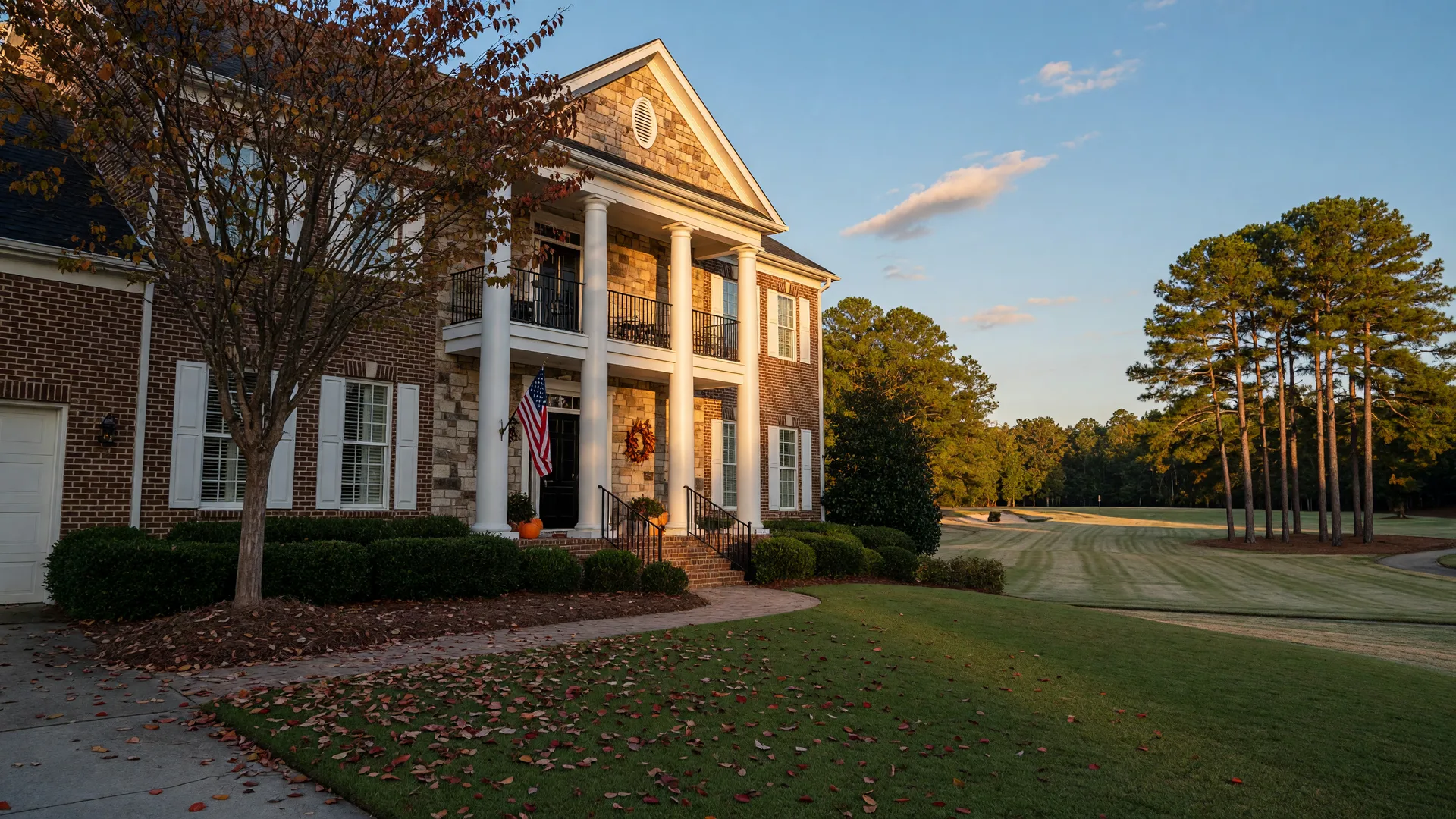
What this means locally: Apalachee Farms does not pause for a ballot. Buyers relocate here for the Trophy Club of Apalachee Golf Course, Gwinnett County schools, the five distinct neighborhoods from The Terraces to The Oaks, and a lifestyle that is up and running in every season. Those motivations do not change on November 4.
waiting for the election
A Redfin survey found 23% of potential first-time buyers said they were holding off until after the election. For the buyers who do act now, that means measurably less competition.
Why 2026 Feels Different: Rates, Affordability, and Politics
Housing affordability has become a defining issue of the 2026 midterms. Mortgage rates climbed back above 7% in early October, the highest level in more than a year, and Bloomberg and the Brookings Institution have both reported that housing costs are moving further out of reach for voters heading into Election Day. When buyers hear candidates argue about housing on the news every night, it is natural to wonder whether waiting could change their numbers.
Here is the reality check. Mortgage rates track the 10-year Treasury yield and lender pricing, not the election calendar. The Federal Reserve sets short-term policy on its own schedule and has signaled a higher-for-longer stance after its September hike. The Mortgage Bankers Association expects rates to stay above 7% through its 2027 forecast horizon, while Fannie Mae projects a dip toward the mid 6% range in early 2027. No credible forecaster ties an expected drop to the outcome of this election.
The bigger story for buyers is the market balance, which has already turned in their favor. Inventory is up roughly 20% year over year, about one in five listings carries a price cut, and Atlanta led the nation this summer in seller concessions, with a record 72.8% of August sales including some form of seller help. That is the trend lines that matter, and it is independent of who wins on Tuesday, November 3.

What the 2026 Election Could Actually Change
The most consequential housing legislation in decades is already on the books. The 21st Century ROAD to Housing Act became law on July 11, 2026, and it was the largest bipartisan federal housing package in years. It boosts supply, expands financing options including an FHA small-dollar mortgage pilot for loans under $100,000, and restricts large institutional investors holding more than 350 properties from buying additional existing homes, a provision aimed at first-time buyers competing for entry-level inventory.
The election will determine whether that policy expands, holds, or reverses. All 435 U.S. House seats and 35 Senate seats are on the ballot, and observers widely expect a divided government, which would make sweeping new housing legislation harder to pass. For buyers and sellers, the message is simple: policy matters over years, not weeks, and no individual home transaction should wait on a congressional forecast.
Closer to home, Georgia voters will decide a constitutional amendment on November 3 that raises the maximum acreage for agricultural and timber conservation use classification from 2,000 to 4,000 acres, a farmland measure that rarely touches subdivision homes. Meanwhile, the legislature is still debating SB 382 and HB 1116, the Homeownership Opportunity and Market Equalization Act proposals that would make the statewide homestead exemption cap mandatory and create a Local Homestead Option Sales Tax for property tax relief. Homeowners should watch those bills, but they are not reasons to postpone a move.
What This Means for Apalachee Farms Buyers and Sellers
Apalachee Farms is a market of about 587 homes across five physically distinct sections, and it is genuinely scarce: golf course, pool, and green-space positioned homes in a master-planned community with the Trophy Club of Apalachee winding through every section. National election psychology does not change the fact that Clubview and The Oaks homes carry premium value for course proximity, or that The Terraces and Riverside offer entry-level and mid-range pricing where concessions are common.
For buyers, the next six weeks are a window of leverage. The buyers sitting out until November 4 are leaving open slots in showing calendars, and sellers who list in the fall are typically motivated. With Gwinnett County homes averaging around 38 days on market and concessions common, a pre-approved buyer can negotiate seriously today. If rates ease in 2027 as Fannie Mae projects, refinancing is always an option; buying the right home at the right price is harder to repeat.
For sellers, the guidance is the same one I give year round: price for today's market, prepare the home, and market it with current photography and storytelling. Buyers relocating to Northeast Metro Atlanta shop with purpose. The ones touring Apalachee Farms in October and November are closer to a decision than the browsers of spring, and a well-presented home in a scarce community still commands attention.
Four Reasons the Election Shouldn't Stop Your Move
If you are deciding between buying before or after Election Day, keep these four data points in mind.
Elections rarely move prices
Home prices have risen an average of 4.84% in U.S. election years since 1987, compared with 4.44% in non-election years, per Case-Shiller data cited by Bankrate. Election results do not override the supply and demand trend already in motion in your local market.
November sales dip, then bounce back
Buyers and sellers adopt a wait and see posture in election years. New-home sales have dropped an average of about 15% from October to November in election years versus roughly 7% in normal years, then rebound in December. After elections, activity tends to spike once political clarity returns.
Fewer buyers can mean more leverage
A Redfin survey found 23% of first-time buyers said they were waiting until after the election to buy. In Apalachee Farms, a short-term dip in competition can translate into more attentive sellers, swifter negotiations, and seller concessions for the buyers who act now.
Rates and inventory matter more than politics
The Federal Reserve sets monetary policy independent of election schedules, and mortgage rates track the bond market, not the ballot box. Rates near 7%, rising inventory, and local market conditions will shape your deal far more than next month's election outcome.
Mark Your Calendar: November 3
The general election is Tuesday, November 3, 2026. Georgia voters will also decide the conservation use acreage constitutional amendment on the same ballot. Your local real estate market, however, runs on its own clock. Whether you buy this month or next, the math that matters is the rate you lock, the price you negotiate, and the home that fits your life.

Lisa's Perspective on Election Season Buying
"I have sold homes through three midterm cycles, and the pattern repeats: buyers hesitate for a few weeks, and the ones who act anyway nearly always land the better deal because there is less competition. In Apalachee Farms, I remind clients that a home like this is not a commodity you can wait out. The right house, at the right price, with today's numbers on paper, beats a guess about what Congress might do next year. Get pre-approved, know your monthly budget at today's rate, and let data, not news headlines, drive your decision."
Frequently Asked Questions About Buying During Election Season
Do elections affect home prices?
Historical data says no material effect. Home prices have risen in election years at a pace slightly better than the long-run average: 4.84% average annual gain in election years since 1987 versus 4.44% in non-election years, according to Case-Shiller data cited by Bankrate. Sacramento appraiser Ryan Lundquist puts it bluntly: an election year does not alter the price trend that is already happening in the market. Supply, demand, rates, and local employment are the forces that move prices.
Is it better to buy before or after the election?
There is no single right answer, because your local market is a stronger signal than the election calendar. The data does show a short November lull as some buyers wait for clarity, and a rebound in sales once results are known. Buying before the election can mean less competition today, while buying after the election can mean more homes coming to market from sellers who waited. In Apalachee Farms, the right home matters more than the month on the calendar, and a prepared buyer wins in either window.
Do elections affect mortgage rates?
Not directly. Mortgage rates track the 10-year Treasury yield and lender pricing, not election results. Market expectations about future policy can influence bond markets, but the Federal Reserve sets short-term policy on its own schedule. The 30-year fixed rate crossed 7% in early October 2026 on bond market pressure, energy prices, and inflation fears, none of which are driven by the ballot. Plan around today's rate and treat any future drop as a refinance opportunity.
What Georgia housing issues are on the ballot or in play in 2026?
Georgia voters will decide a conservation use property tax amendment that would raise the maximum acreage for agricultural and timber conservation use classification from 2,000 to 4,000 acres, a measure aimed at farmland rather than subdivision homes. Meanwhile, the legislature is debating SB 382 and HB 1116, companion proposals to make the statewide homestead exemption cap mandatory and create a Local Homestead Option Sales Tax for property tax relief. None of these change day to day home sales, but they are worth watching if you own or plan to buy in Georgia.
Should sellers wait to list until after the election?
Typically, no. The buyers shopping in October and November are serious, lifestyle-driven buyers, not browsers, and there is measurably less competition among buyers during election season. In a community like Apalachee Farms, where buyers move for schools, amenities, and golf course living, the homes that sell best are priced for the current market and marketed with current photos, video, and staging. Waiting rarely improves your position, but pricing and presentation do.
More Market Reading
Deciding When to Move in 2026?
Lisa Harris combines nearly 20 years of local market knowledge with real-time mortgage rate data and deep relationships with trusted local lenders. Whether you are buying, selling, or just weighing your options in Apalachee Farms, she can help you build a strategy that works in this market, before or after Election Day.
Lisa Harris, MBA, CLHMS GUILD
Lisa Harris is a CLHMS GUILD Certified Luxury Home Marketing Specialist serving Apalachee Farms, Dacula, and Northeast Metro Atlanta's premier golf course and country club communities. With nearly 20 years of experience, an engineering degree, and an MBA, she provides buyers and sellers with data-driven insight, section-level market knowledge, and strategic negotiation expertise. Her work has been featured in RISMedia, Realtor.com, Inc. magazine, and Atlanta News First.
Information believed to be accurate but not guaranteed. Election and housing market context sourced from NAR, Bankrate and Case-Shiller data, Meyers Research via Forbes, Mansion Global, Redfin, the Brookings Institution, Bloomberg, Schwab, and the Bipartisan Policy Center. Georgia ballot and legislative context sourced from Ballotpedia, the Georgia Recorder, and the Georgia Municipal Association. Market data for Gwinnett County and Apalachee Farms sourced from GAMLS and FMLS. Apalachee Farms findings grouped regardless of MLS spelling variations. Consult Lisa Harris for the most current rates and market information.