
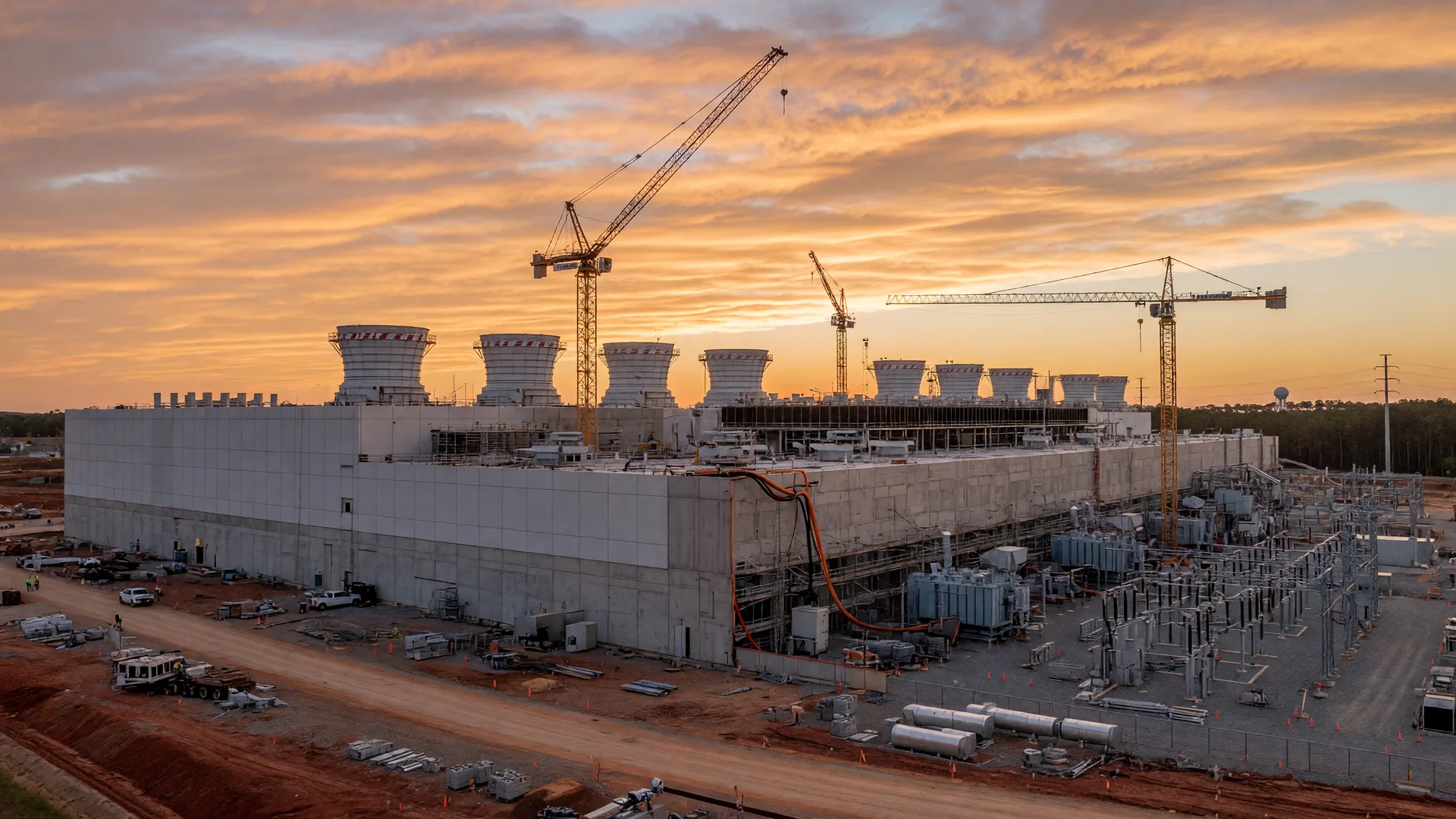
Georgia's New Gold Rush Isn't Gold. It's Data.
If you have driven around metro Atlanta lately and noticed massive windowless buildings under construction, you are witnessing one of the biggest economic transformations in Georgia's history.
Driven by artificial intelligence (AI), cloud computing, streaming services, and our increasingly connected world, metro Atlanta has quietly become one of the most important data center markets in North America.
The Numbers Are Eye-Opening
#2
Largest data center market in the US (behind Northern Virginia)
1,459 MW
Operational data center capacity online at end of 2025
2,076+ MW
Additional capacity currently under construction
2%
Data center vacancy rate (most facilities pre-leased)
Georgia has approved power generation that could support more than 10 gigawatts (10,000 MW) of future data center growth. Despite rapid construction, Atlanta's data center vacancy rate sits at just 2%, meaning most new facilities are leased before they are even completed.
What Exactly Is a Data Center?
Think of a data center as the engine room of the digital economy. Every Google search, ChatGPT conversation, Netflix movie, online banking transaction, social media post, and cloud file relies on servers housed inside these highly secure facilities. As AI continues to grow, so does the demand for computing power, making data centers one of the fastest-growing commercial real estate sectors in the world.
Why Atlanta?
Georgia checks nearly every box technology companies are looking for:
These advantages have attracted investments from Microsoft, Google, Meta, Amazon Web Services (AWS), QTS, Digital Realty, and many other technology companies.
Where Is Growth Happening?
Much of today's development is concentrated in South Fulton, Union City, Douglas County, Fayette County, Henry County, Coweta County, and Newton County. Industry experts expect expansion to continue into surrounding metro Atlanta counties as additional power infrastructure becomes available.
Why This Matters for Real Estate
Data centers don't typically employ thousands of permanent workers, but they do generate significant economic activity through construction, infrastructure improvements, and long-term tax revenue. Potential impacts include:
- Increased demand for industrial land
- Utility and road improvements
- Commercial development
- Construction employment
- Supporting businesses moving into surrounding areas
- Long-term investment in local communities
These projects can influence where future residential growth occurs and where businesses choose to invest.
The Challenges
Rapid growth has also created important conversations throughout Georgia. Residents and local governments are weighing concerns about electricity demand, water consumption, land use, noise from backup generators, community planning, and balancing economic growth with quality of life. As AI continues expanding, these discussions are becoming increasingly important for communities across the state.
My Take
As a REALTOR, I believe understanding local economic trends is just as important as knowing home prices or mortgage rates. Whether it is a new employer moving into town, transportation improvements, or the rapid expansion of AI infrastructure, these investments help shape future housing demand, property values, and community growth.
The next time you drive past one of those enormous windowless buildings, remember: you are looking at the infrastructure powering artificial intelligence, and helping position Georgia at the center of the digital economy.
If you would like to learn more about growth trends in Northeast Metro Atlanta or how economic development may impact your home's value, I would love to connect.

Let's Talk About Georgia's Growth
With nearly 20 years of experience in Northeast Metro Atlanta real estate, Lisa Harris can help you understand how economic development trends affect your home, your investment, and your next move.
CLHMS Million Dollar Guild Elite · REMAX Center · (404) 307-9898