
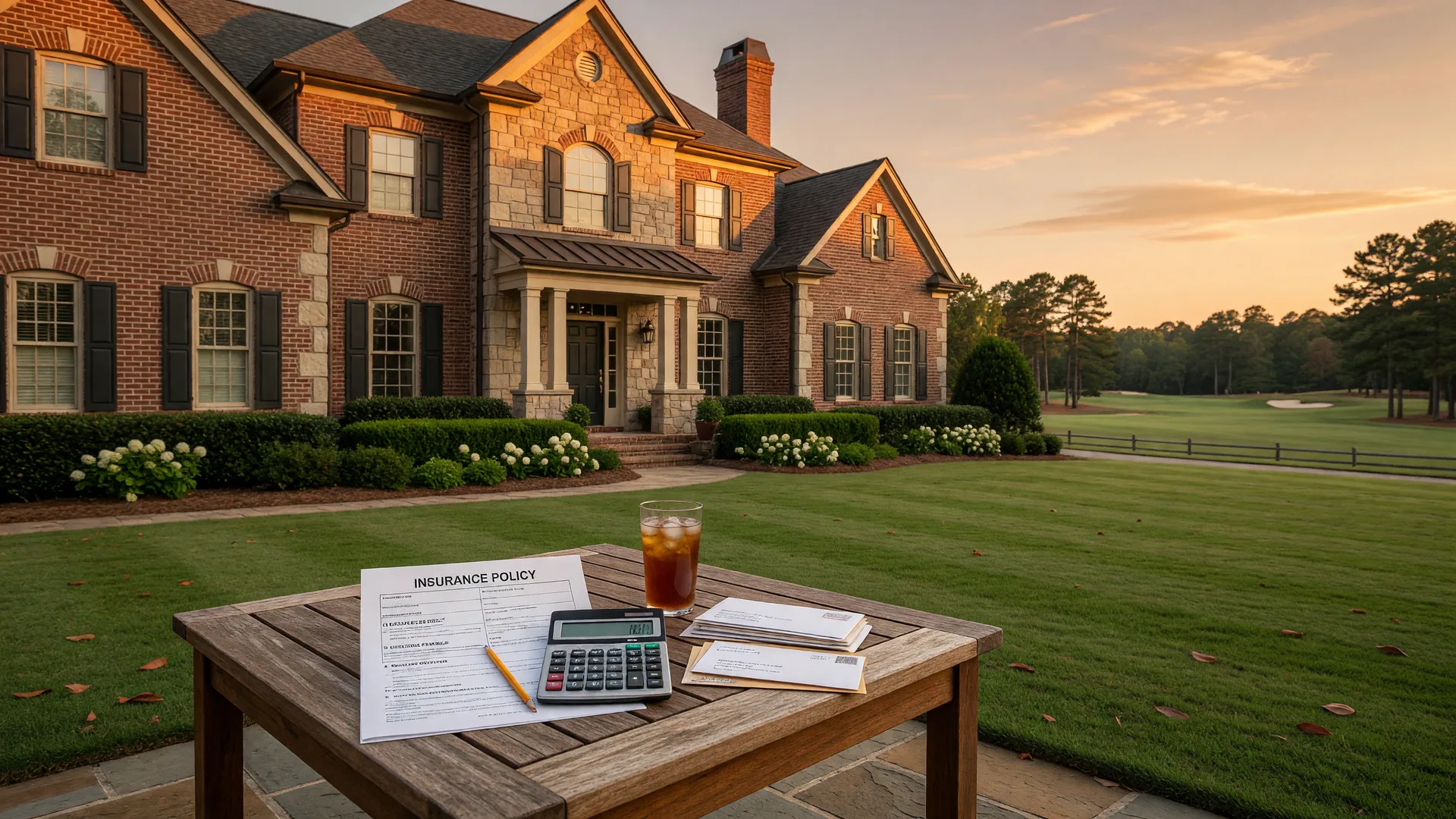
Homeowners insurance has quietly become one of the biggest stories in Georgia real estate. Premiums are up roughly 24% from 2023 to 2025, the average policy now runs about $2,000 to $2,300 a year, and another jump of roughly 10% is projected for 2026. For buyers, sellers, and homeowners, this line item now shapes monthly budgets, closing timelines, and what a home is actually worth.
As a luxury real estate specialist with nearly 20 years in Apalachee Farms and Northeast Metro Atlanta, I talk with clients about insurance every week. This guide covers what is driving the increases, what they mean for a golf course community like ours, and the concrete steps buyers, sellers, and owners can take to protect their budgets. The good news: in an inland market like Gwinnett County, insurance is manageable, and the right preparation can make a real difference in what you pay.
The Cost of Homeowners Insurance in Georgia Right Now
How much Georgia homeowners insurance premiums grew from 2023 to 2025, with 2025 alone up about 8.6%, versus roughly 5.6% nationwide
The approximate average annual homeowners insurance premium in Georgia, after cumulative increases of about 39% since 2021
Georgia's rank among U.S. states by combined ratio in 2024, the share of every premium dollar paid out in claims plus expenses
The nonrenewal notice your insurer must now give you in Georgia, doubled 30 to 60 days under Act 277 (2025)
The numbers come from the Georgia Recorder's deep look at insurability, the AJC's 2026 analysis of home insurance costs in the state, and Insurance.com's national state-by-state reporting. Cumulatively, Georgia premiums have risen about 39% since 2021, and the state is now among the most expensive venues to insure a home in the Southeast, near neighbors like South Carolina and Alabama that have seen double-digit jumps.
Georgia is not the most expensive state in the region. Louisiana premiums climbed roughly 58% over the same period and Virginia about 37%. But the trajectory matters more than the current rank: every renewal cycle since 2021 has brought a higher bill, and the projected 10% increase for 2026 extends that pattern.
Why Are Homeowners Insurance Rates Climbing in Georgia?
The single biggest shock was Hurricane Helene in September 2024. The storm killed 37 Georgians, damaged tens of thousands of homes, and inflicted an estimated $5.5 billion in losses across the state. Critically, Helene carried hurricane-level damage far inland, into middle and central Georgia towns that carriers had never priced for that risk. That experience pushed a wave of rate filings and permanent repricing across the entire state, because insurance is priced and pooled.
Reinsurance costs amplify the problem. Insurers buy their own backup coverage, and after years of catastrophic losses, the price of reinsurance has jumped. Insurers pass that through, and every Georgia homeowner who carries a policy pays it. Georgia itself ranked third in the country by combined ratio in 2024, meaning insurers paid out a larger share of every premium dollar as claims and expenses. When claims outpace premiums, rates follow.
The last driver is the rising cost to rebuild. Lumber, roofing materials, labor, and code upgrades all cost more in 2026 than they did in 2020. Replacement cost insurance is supposed to track rebuild prices, so as construction costs rise, so do dwelling limits and therefore premiums.
Why Availability Matters as Much as Price
Higher premiums bring a second, quieter risk: availability. Georgia carriers have tightened underwriting, slowed new business, and increased nonrenewals, and the Georgia Underwriter Association, the state's backstop of last resort, is serving more owners who cannot qualify in the standard market. In response, Georgia passed Act 277 in 2025, extending the nonrenewal notice period from 30 days to 60 days so families have a real window to find replacement coverage.
What Insurance Costs Mean for Apalachee Farms and Gwinnett County
Apalachee Farms sits in Northeast Metro Atlanta in inland Gwinnett County, comfortably away from the coast. That geography matters: we are not looking at storm surge pricing the way Tybee Island or Savannah does. But insurance is a state pool, so Gwinnett homeowners pay the same reinsurance, Helene-inflation, and rebuilding-cost pressures as homeowners in Columbus. Our local weather risks are hail, severe thunderstorms, tornadoes, and wind rather than hurricanes.
Cost is also tied to the price of the home. Apalachee Farms runs from roughly $500K entry pricing in The Terraces up to about $1.3M for estates in The Oaks, and the coverage amount tracks the replacement value, not the purchase price. A larger luxury home with custom finishes, a pool, and outbuildings brings a larger dwelling and more expensive replacement, which means a premium that can sometimes surprise first-time and mid-market buyers.
The practical effect: insurance is now a line item your lender escrows every month alongside property taxes, and buyers must set their budgets knowing it. Property taxes and HOA dues drive the numbers on our cost of living page, and insurance belongs in that same list of annual ownership costs.
For Buyers: A Five-Point Insurance Checklist
Coverage affects your monthly payment, your due diligence, and your ability to close. Here are the five things buyers ask me about most often.
Ask for Insurance Quotes During Due Diligence
Before you sign your final offer, ask your agent to run insurance estimates on the specific home. Two similar houses can carry different premiums based on age, roof condition, and previous claims. Knowing the figure before you commit keeps your total payment honest.
Budget the Premium Into Your Monthly Number
Lenders escrow your insurance with your taxes, so the premium lands in your monthly payment. On a $600,000 to $900,000 home in a community like Apalachee Farms, insurance can add meaningfully to housing costs above principal, interest, and taxes. Calculate it before you set your price ceiling.
Confirm Coverage Amounts, Not Just Price
A cheaper policy that underinsures your replacement cost is a false economy. Your lender requires coverage at least to the loan amount, but the right number is often closer to the rebuild cost of the home. Ask your agent how each quote arrives at its dwelling limit.
Check for a Separate Flood Policy Need
Standard homeowners policies do not cover flood damage. Before closing, check the FEMA flood map for the property and ask whether a separate flood policy would be required or recommended. In Northeast Metro Atlanta most homes sit outside high-risk zones, but every purchase deserves the check.
Expect Insurers to Ask About the Roof
Roof age and condition are the single biggest underwriting questions in Georgia. A newer roof usually means an easier path to a standard policy, while a roof near the end of its life may trigger higher pricing or a requirement to repair before a policy is issued.
For Sellers: Insurance Impacts Your Sale More Than You Think
Pull Your Claims History Early
Buyers' lenders will underwrite both the buyer and the property, and a recent claim history can shape a buyers ability to secure coverage. Gathering your claims record, roof installation date, and carrier correspondence before the first showing keeps the transaction from stalling in the final weeks.
Newer Roofs Are a Marketing Asset
A new or recent architectural shingle roof is one of the most valuable disclosures you can make in today's insurance climate. It lowers the buyer's cost of coverage and can shorten the inspection and approval process. Highlight it in your listing summary.
Coach Your Buyer on the Quote Timeline
Insurance quotes take lenders several days to finalize, and a policy must bind before a conventional closing. When a buyer expresses serious interest, encourage them to get a quote immediately. Delays here are one of the most common causes of pushed back closings.
Use the 60-Day Rule to Your Advantage
If you receive a nonrenewal notice, Act 277 requires at least 60 days' notice in Georgia. That window is now enough time to shop for replacement coverage or repair an addressable concern before your policy lapses. Never assume a nonrenewal means your home is uninsurable.
For Homeowners: Four Ways to Manage a Rising Premium
Shop Your Policy Every 12 Months
Carrier shopping is the most effective lever in this market, and the savings can be significant. The insurer that served you five years ago may not have the most competitive rate today. A quick comparison through a local independent agent costs you nothing.
Right-Size Your Deductible and Discounts
Raising a deductible from $1,000 to $2,500 can cut premium meaningfully, and most carriers offer discounts for claims-free years, new roofs, security systems, and bundling auto and home policies. Ask your agent to run the numbers before you raise anything.
Replace Instead of Patch When It Makes Sense
Roof age drives more Georgia premium decisions than almost any other factor. If a roof is near 15 years old, a proactive replacement claim can unlock credits and head off nonrenewal pressure. Run the math with an estimator and your agent before deciding.
Respond to Nonrenewal Notices Immediately
Act 277 gives you 60 days, but that window moves fast. Document the reason, fix what is fixable, and shop replacement coverage right away. The Georgia Underwriting Association exists as a backstop, but standard-market coverage is almost always more affordable if you can qualify.

Lisa's Perspective on Insurance and Home Values
"Insurance is now a real estate conversation, and I want buyers and sellers to treat it that way. Buyers should budget it into the monthly payment and quote homes during due diligence. Sellers should prepare roof and claim documentation before the first showing. And homeowners should shop the policy the way they shop anything else, once a year. None of this changes that Apalachee Farms remains one of the strongest long-term values in Northeast Metro Atlanta. It just means thinking clearly about the full cost of ownership."
Frequently Asked Questions About Homeowners Insurance in Georgia
Why is homeowners insurance going up in Georgia?
Several forces stack on top of each other. Hurricane Helene in 2024 delivered an estimated $5.5 billion blow to the state and pushed catastrophic losses far inland, where carriers had never priced that risk. Reinsurance costs, the price insurers pay for their own backup coverage, have jumped. Reconstruction costs for labor and materials keep rising. And Georgia ranked third in the country by combined ratio in 2024, meaning insurers here pay out a larger share of every premium dollar than almost anyone else.
How much does homeowners insurance cost in Georgia in 2026?
Average Georgia premiums sit in the roughly $2,000 to $2,300 range, up around 39% cumulatively since 2021. Increases of about 24% from 2023 to 2025, and a further jump of approximately 10% is projected for 2026. Your actual premium depends on the home's replacement cost, roof age, deductible, claims history, and your location, so quotes vary widely.
Will a new law protect Georgia homeowners?
Georgia passed Act 277 in 2025, which extends the nonrenewal notice period from 30 days to 60 days. That law gives homeowners more time to find replacement coverage and, if possible, fix the issue that triggered the nonrenewal. It does not cap premium increases. Regulating rate filings remains the broader policy conversation across the Southeast.
Is homeowners insurance a problem in Northeast Metro Atlanta?
Northeast Metro Atlanta is inland, away from the coastal storm surge zone, but the state's rate trends apply. Insurance is priced at a state and regional level here, so Gwinnett County homeowners feel the same reinsurance and weather-driven pressure as the rest of Georgia, mainly through severe storms, hail, tornadoes, and rising rebuilding costs.
How should buyers budget for insurance in Apalachee Farms?
Apalachee Farms ranges from about $500K entry pricing in The Terraces to $1.3M estates in The Oaks, and replacement cost drives insurance for luxury homes. A realistic premium estimate plus property taxes will push your monthly housing cost above principal and interest. Ask for a quote during due diligence and fold the number into your budget before you set your ceiling.
Can a seller be blocked from closing because of insurance?
It is a fixable, but common, reason for a delayed closing. If the buyer's lender cannot bind a policy on the home within the financing approval timeline, the closing can slip. Disclosing roof age and claims history up front, and encouraging the buyer to quote early, keeps the transaction clean in Apalachee Farms and across Gwinnett County.
Has an Insurance Bill Changed Your Plan?
Whether the coverage is rising, you are shopping for a home, or you want to understand the full cost of a home in Apalachee Farms, Lisa Harris can help. She combines nearly 20 years of local market knowledge with the trusted lenders and insurance agents who serve Northeast Metro Atlanta every day, so your budget is built on real numbers.
Lisa Harris, MBA, CLHMS GUILD
Lisa Harris is a CLHMS GUILD Certified Luxury Home Marketing Specialist serving Apalachee Farms, Dacula, and Northeast Metro Atlanta's premier golf course communities. With nearly 19 years of experience and an MBA, she guides buyers and sellers through every layer of a home purchase, including insurance, taxes, and financing. Her work has been featured by RISMedia, Realtor.com, and Atlanta News First.
Information believed to be accurate but not guaranteed. Premium and cost data sourced from the Georgia Recorder, the Atlanta Journal Constitution, and Insurance.com, plus the Independent Insurance Agents of Georgia. Hurricane Helene impacts per Georgia Recorder,and Insurance Journal reporting. Contact Lisa Harris,for the most current rates and market information. Insurance is regulated individually by carrier and provider.