
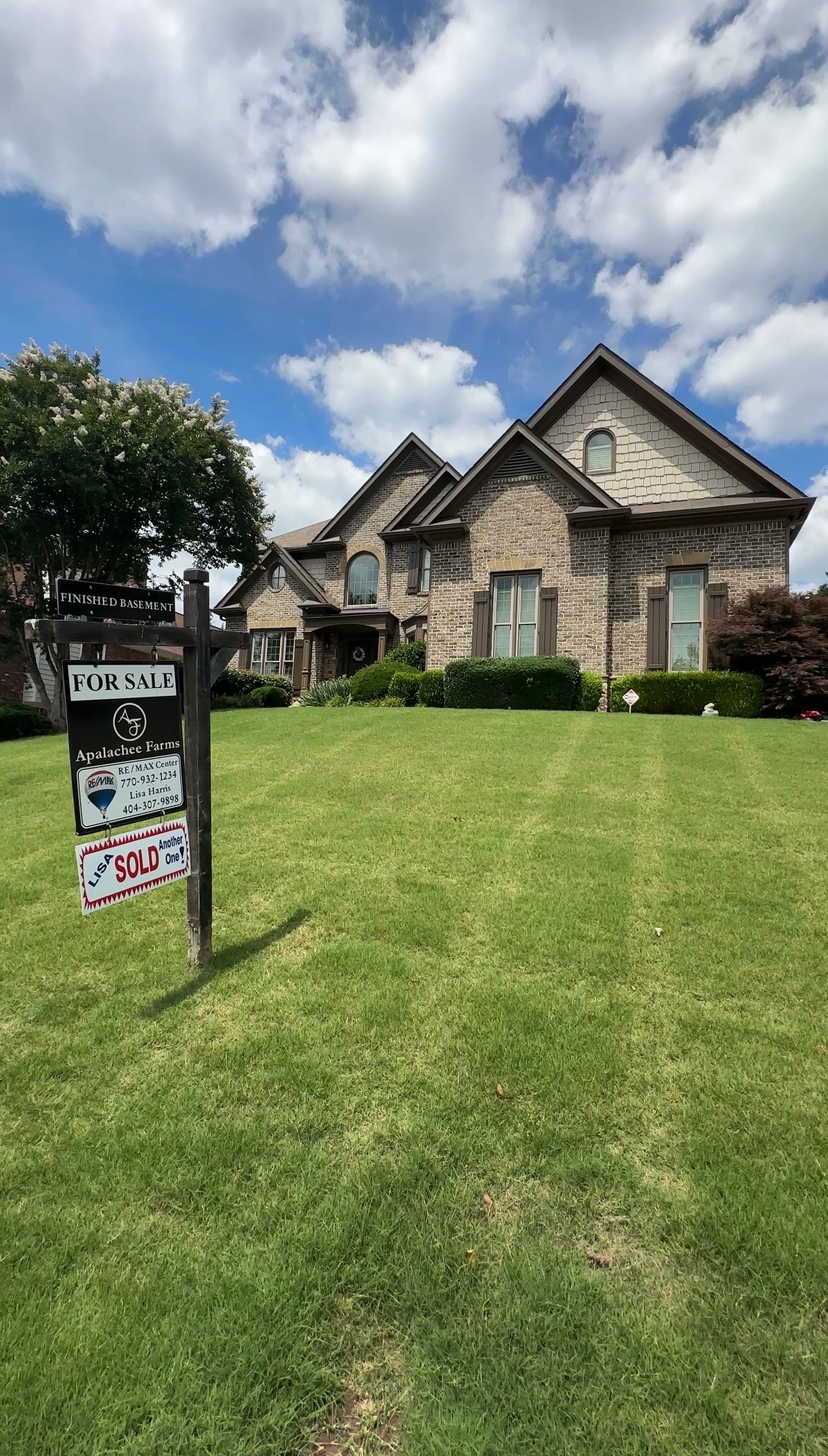
If you have been watching the real estate market in Dacula, Georgia, or anywhere across Northeast Metro Atlanta, you have noticed something: more price reductions. That is not a sign of a failing market. It is a sign of a market that is correcting itself after years of inflated expectations. As a CLHMS-certified luxury specialist who has been selling homes in Apalachee Farms for nearly two decades, I want to break down what price reductions actually mean, why they are increasing, and what both buyers and sellers should understand right now.
Why Price Reductions Are Increasing Nationwide
Sellers across the country are no longer testing the market with aspirational numbers. They are getting more realistic. The market is no longer rewarding wishful pricing. It is rewarding accurate pricing.
To understand why, you have to look at where we came from. Between 2021 and 2023, sellers had an enormous advantage. Inventory was at historic lows, buyer demand was fueled by low interest rates, and homes routinely sold above asking price within days of hitting the market. In that environment, overpricing often still worked because eager buyers would compete regardless.
Those days are over. Today's market is more balanced. Inventory has increased meaningfully in most Georgia markets, giving buyers more choices than they have had in years. When buyers have options, they become selective. They compare. They wait. And when a home is priced above market value, they move on to the next listing.
Nationwide, and especially in Georgia, the data tells the story. Georgia currently leads the entire nation in listing cancellations at 12%, according to recent market data. In Metro Atlanta specifically, approximately 11% of sellers are choosing to remove their homes from the market or delist entirely. That number is directly connected to overpricing. Sellers who list too high, watch their homes sit, and eventually either reduce or withdraw.
were cancelled
Georgia leads the nation in listing cancellations, and Metro Atlanta accounts for the majority. Overpricing is the primary driver behind these numbers.
How Buyers and Sellers Should Interpret Price Reductions
Many agents in today's market are inexperienced. They have not navigated a balanced market before. They did not sell through the 2008 correction, and they may not fully understand the cost of getting the launch price wrong. A $20,000 price reduction after 60 days on the market can be far more costly than pricing it right at day one.
Here is why. When a home is overpriced, a domino effect begins. The first two weeks on the market are the most critical. That is when buyer attention is highest, when the listing gets the most views on Zillow, Redfin, Realtor.com, and the local MLS feeds. If the price is wrong during that window, the most serious buyers skip it. The showing activity drops. And once a listing goes stale, every buyer who sees it wonders what is wrong, even if nothing is wrong with the home itself.
The result is predictable: reduced showing activity, buyer skepticism, and ultimately a lower final sale price than if the home had been priced correctly from the beginning. Data from GAMLS and FMLS consistently shows that homes priced within 2% of their market value at launch sell faster and closer to asking price than homes that start high and adjust downward.
The right listing agent does not guess. She uses data-driven pricing from day one, informed by verified comparable sales, section-specific trends, and hyper-local market knowledge. In a community like Apalachee Farms, where five physically distinct neighborhoods each have their own price dynamics, that section-level expertise matters enormously.
The Real Cost of Overpricing
A home listed 5% above market value will typically see 50% fewer showings in the first two weeks. After 30 days, buyer interest drops even further. After 60 days, the home often sells for 3% to 5% less than it would have if priced correctly at launch. The math is simple: overpricing does not leave room to negotiate up. It starts you negotiating down from a weaker position.
Does a Price Reduction Mean Something Is Wrong?
Not at all. A price reduction is usually a market correction or a strategic adjustment when a seller lists at a higher price to allow room for negotiation or buyer incentives. It typically does not mean there is anything wrong with the home.
In fact, it helps to think about it this way: the first price is marketing. The adjusted price is reality. When a seller lists a home slightly above the comps, they are testing the market to see what buyer demand looks like at that level. If the response is softer than expected, a strategic price adjustment brings the listing into alignment with what the market will bear. That is not failure. That is good strategy.
In luxury communities like Apalachee Farms and Chateau Elan, price reductions can be particularly nuanced. These are sophisticated markets where buyers are well-informed and often working with experienced buyer's agents. A price adjustment on a golf course estate in The Oaks section of Apalachee Farms does not carry the same implications as a reduction on a tract home in a high-inventory subdivision.
Here in Dacula's luxury market, I have seen price reductions used as genuine negotiation tactics. A seller may price slightly high to capture attention, evaluate the response in the first 10 to 14 days, and then make a strategic adjustment to drive urgency and create competitive pressure among remaining interested buyers. When executed correctly, this approach can still result in a strong final price.
The key is context. A price reduction tells a story, and you need to know how to read it. Is this a correction because the home was overpriced from the start? Or is it a calculated adjustment designed to generate renewed buyer interest? The answer depends on the property, the market conditions, and the strategy behind it.
What Buyers and Sellers Need to Know Right Now
We are seeing approximately 11% of sellers remove their homes from the market or delist in Metro Atlanta. At the state level, Georgia leads the entire country with a 12% listing cancellation rate. These are not small numbers. They represent thousands of sellers who listed, did not get the response they expected, and chose to pull their homes rather than reduce.
Today's buyers know the market is more balanced, so they are less emotional. They are not rushing to submit offers sight unseen. They are comparing properties, reviewing price history, and waiting for the right value. An overpriced home does not create urgency in today's buyer pool. It creates skepticism.
On the seller side, the goal in 2026 is not "list high and negotiate down." Smart sellers and smart listing agents work together to create the right demand so that buyers compete. That means pricing at or very near market value, investing in professional photography, video, and digital marketing, and launching with a strategy designed to generate maximum activity in the first 14 days.
Accurate pricing generates multiple offers and creates urgency. Overpricing leads to stagnation, price reductions, and ultimately a weaker negotiating position. The choice is clear, and the data supports it across every market segment, from the entry-level homes in The Terraces at Apalachee Farms to the premier estates in The Oaks.

Lisa's Perspective
"After 19 years selling in Apalachee Farms, I have learned that the right price at launch is the single most important decision a seller makes. It determines everything that follows: buyer interest, showing activity, offer quality, and final sale price. In a balanced market, pricing strategy is not optional. It is essential."
Thinking About Buying or Selling?
Lisa Harris combines nearly 20 years of experience with data-driven pricing strategy and luxury marketing to help buyers and sellers in Apalachee Farms, Dacula, and Northeast Metro Atlanta make confident, informed decisions.
Frequently Asked Questions About Price Reductions
Are price reductions common in the current market?
Yes, price reductions are increasingly common across the United States and especially in Georgia. At the state level, Georgia leads the nation with a 12% listing cancellation rate, and Metro Atlanta has seen approximately 11% of sellers remove their homes from the market entirely. Price reductions are a normal and healthy part of a market that has shifted from the pandemic-era frenzy to more balanced conditions.
Should I list my home high and reduce later?
No. Listing high and reducing later is one of the most costly mistakes a seller can make. Overpriced homes lose showing activity within the first two weeks, attract fewer offers, and often ultimately sell for less than they would have if priced correctly from day one. Data from GAMLS and FMLS consistently shows that homes priced accurately at launch sell faster and closer to asking price.
How does an experienced agent help me price my home correctly?
An experienced agent uses verified comparable sales data from GAMLS and FMLS, combined with hyper-local knowledge of your specific section, lot characteristics, and current buyer demand. In communities like Apalachee Farms, where five distinct neighborhoods each have their own price dynamics, section-level expertise is essential. An agent with 19 years in a single community can spot trends and price signals that a generalist agent will miss.
Do price reductions mean the home has problems?
Not necessarily. A price reduction is usually a market correction or a strategic adjustment. Some sellers list slightly above market value to allow room for negotiation or to test buyer response. When a price is adjusted, it often reflects the reality of what buyers are willing to pay in the current market, not a defect in the property itself. In luxury communities like Apalachee Farms, price adjustments can be sophisticated negotiation tactics.
Lisa Harris, MBA, CLHMS GUILD
Lisa Harris is a CLHMS GUILD Certified Luxury Home Marketing Specialist and Real Estate Negotiation Expert serving Apalachee Farms, Dacula, and Northeast Metro Atlanta's luxury communities. With nearly 20 years of experience and a data-driven approach to pricing and marketing, Lisa helps sellers achieve outstanding results in any market condition.