
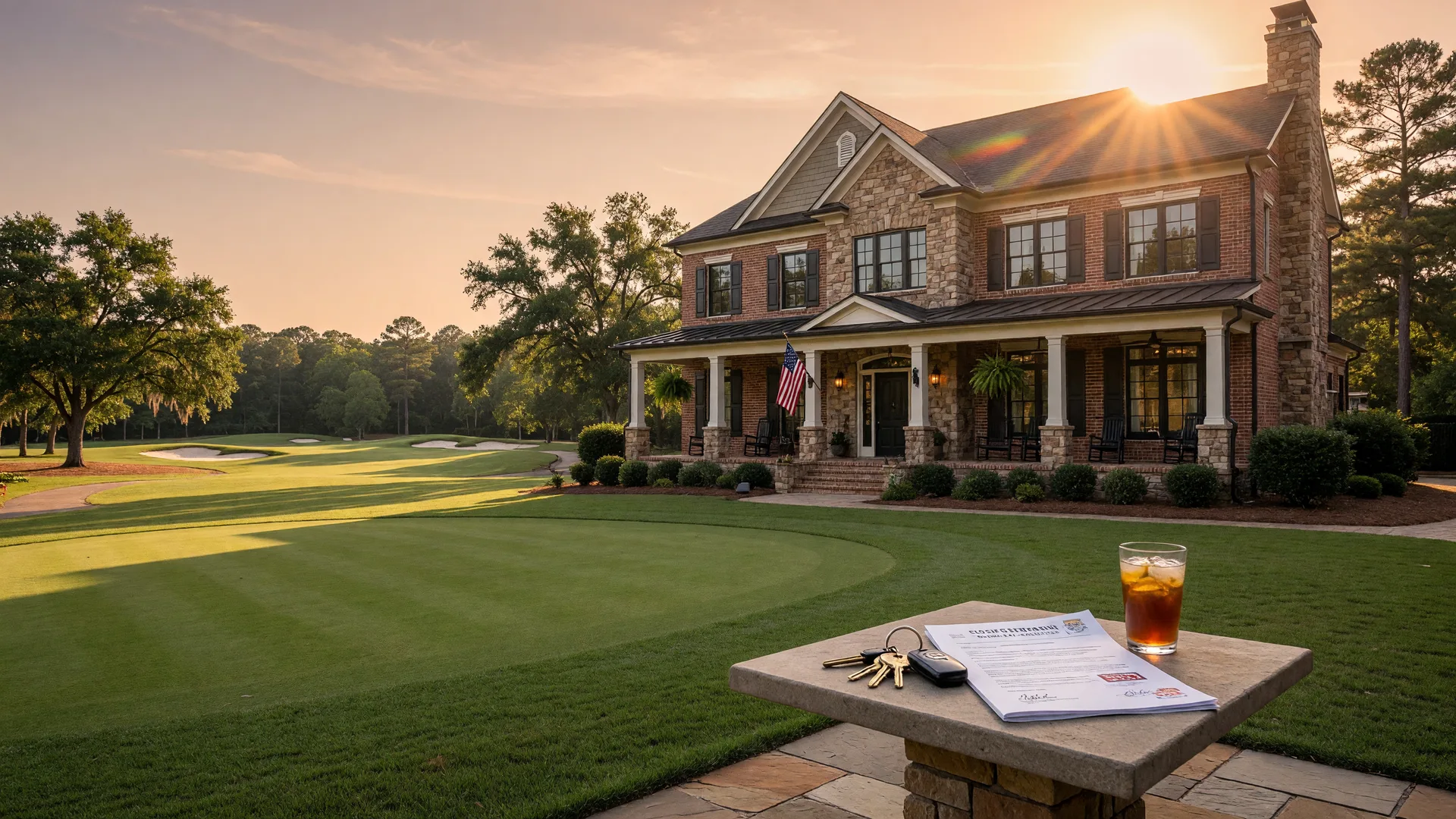
Seller concessions are the defining negotiating story of the 2026 housing market. Redfin's September 18, 2026 report, covering the three months ending August 31, found that 44.7% of U.S. home sales included a seller concession, the highest August share since at least 2020, and that Atlanta led every major metro at roughly 72.8%, about 7 in 10 deals. Combined with about 15.8% of sales that paired a concession with a price reduction, the record shows sellers across the country, and emphatically in our corner of Georgia, reaching across the closing table.
As a luxury real estate specialist with 19 years of experience selling in Apalachee Farms, 10 of them as a resident, I negotiate concessions every week, and I hold the RENE (Real Estate Negotiation Expert) designation, which makes this my home turf. Whether you are buying with leverage you have not had for years or selling into a market that expects a contribution, here is how to make concessions work for you instead of against you.
What Are Seller Concessions, and Why Did They Surge in 2026?
A seller concession is any cost the seller agrees to pay on the buyer's behalf: a credit toward closing costs, a mortgage rate buydown, a repair allowance, a home warranty, or prepaid items such as property taxes and HOA fees. They have always existed, but they rarely moved the market. In 2026, three forces converged: mortgage rates holding near 6.5% to 6.9%, prices at records, and inventory climbing as the lock-in effect finally loosened. Buyers got choices, and sellers got competition.
Redfin now calls the current climate the strongest buyer's market in its records going back to 2013, with sellers outnumbering buyers nationally by 58%, the largest gap on record. In practical terms, buyers who negotiated terms barely existed a few years ago: sellers paying thousands toward the buyer's closing, funding rate buydowns, and agreeing to repair requests that would have been laughed at in 2021. The concessions share climbed to 44.7% in August 2026 from 42.6% a year earlier, and Atlanta's 72.8% was the highest of any major U.S. metro, ahead of Sun Belt peers Charlotte and Phoenix near 70%.
Locally, the leverage is even more visible. Northeast Metro Atlanta is carrying roughly 50% more active listings than a year ago, and Gwinnett County homes average about 37 to 38 days on market, per realtor data. When a home sits two weeks past that average, the conversation stops being about price alone and starts being about what the seller will contribute to make the numbers work.
home sales included a concession
Atlanta led every major U.S. metro, ahead of Charlotte and Phoenix near 70%. Roughly 7 in 10 local deals now include a seller contribution of some kind, the clearest signal yet that this cycle belongs to buyers.
The Numbers Behind the Record
What do these concessions actually look like in dollars? Redfin cites typical seller contributions in the $10,000 to $20,000 range, with builders in markets like Dallas adding rate buydowns, appliance packages, and credits of $10,000 or $20,000 to move inventory. On an Apalachee Farms home priced between $500,000 and $900,000, a 2% to 3% concession works out to $10,000 to $27,000 in real seller money, roughly the difference between a comfortable close and a stretch close for many buyers.
The share of sales combining a concession with a price cut is worth watching too. At 15.8% nationally, the double discount is usually the footprint of an overpriced listing: the seller resisted pricing at market value, the home sat, and then the seller had to give twice. Sellers who price accurately and offer a single, well-structured concession almost always net more than sellers who chase a number and end up paying twice.
What Sellers Are Offering Right Now
Across Gwinnett County and Northeast Metro Atlanta, the most common seller contributions I see on the MLS and in my own negotiations are closing cost credits of $5,000 to $15,000, seller-paid rate buydowns (especially 2-1 buydowns), repair credits after inspection, home warranties, and prepaid items that shift thousands off the buyer's cash to close. In new construction, builders are folding incentives into the price rather than cutting it outright, which keeps the comparable sales picture intact while sweetening the deal for buyers.
The shape of the concession matters as much as the size. A buyer with a 20% down payment may prefer a straight closing cost credit, which shrinks cash to close. A buyer putting down 3% to 5% may value a rate buydown more, because the monthly payment is the constraint. Sellers who understand which lever moves the buyer's numbers get more credit for less money, which is negotiation in its purest form.
What Record Concessions Mean for Buyers
If you are buying, this is the friendliest negotiating climate in more than a decade, and you can use it deliberately. Four moves make the biggest difference.
Ask Early, and Ask in Writing
The strongest concession requests are part of the offer, not an afterthought that follows the inspection. When your agent presents the offer, have it spell out the exact credit you want, whether that is help with closing costs, a rate buydown, or a repair allowance. Sellers respond to offers they can evaluate all at once.
Match the Concession to Your Loan
A closing cost credit lowers your cash to close. A temporary rate buydown lowers your monthly payment, often more valuable in a 6% rate world. Your lender sets the exact limits for seller contributions, which vary by loan program: conventional loans generally cap seller-paid costs at 3% to 9% depending on your down payment, FHA allows up to 6%, and VA caps at 4%. Ask your lender for the number that applies to your loan before you write it into an offer.
Do Not Overreach and Weaken the Offer
There is a point where a very large credit request makes an offer look thin, especially against backup offers. In an Atlanta market where about 72.8% of sales already include a concession, asking for 2% to 3% of the purchase price in credits is normal and expected. Asking for the moon in a multiple-offer situation can cost you the home.
Think About the Payment, Not Just the Price
A $10,000 price reduction changes your monthly payment by only a few dollars. A $10,000 seller credit applied to a rate buydown can cut your payment by $50 to $75 a month in today's rate environment. Buyers who know the monthly numbers, not just the sticker price, get the better deal.
What Record Concessions Mean for Sellers
Sellers, the record is not a penalty, it is a playbook. The sellers who close quickly and protect their net follow the same four principles.
Price It Right the First Time
The data is blunt: 15.8% of sales ended up with both a price cut and a concession. That double penalty usually follows an overpriced listing that sat, drew stale days on market, and lost negotiating ground. A home priced at current market value attracts buyers early, when your negotiating position is strongest.
Advertise Sensible Concessions Up Front
Listing a modest closing cost credit or buydown in the marketing gets serious buyers in the door and filters out shoppers who cannot get financing to close anyway. Sellers who wait to be asked usually end up giving away the same money later, after the listing has aged.
Know Your Net, Not Just Your Number
Work backward from what you need to clear at closing. A $15,000 concession on a $700,000 sale is a 2.1% haircut. A 30-day delay, or a second price reduction, often costs more in time and stress than the credit ever will. In a buyer's market, the concession is frequently the cheapest price of admission.
Lead With the Lifestyle in the Luxury Segment
Above about $700K, in sections like The Oaks at Apalachee Farms, buyers expect the value story too: golf course proximity, lot characteristics, finishes, and the resort-style amenities. Cinematic marketing plus a fair concession package beats a bare listing plus a desperate price cut, every time.
The Apalachee Farms Angle
In a golf course community, the value story is layered. Apalachee Farms spans The Terraces at roughly $500K to $700K, Riverside at $575K to $800K, Sterling Green at $650K to $850K, Clubview at $600K to $750K, and The Oaks at $850K to $1.3M, all sharing four pools, a fitness center, seven tennis courts, six pickleball courts, and the Trophy Club of Apalachee Golf Course. In the entry sections, concessions are a routine part of the conversation. In the luxury sections, buyers expect the contribution plus the experience: cinematic video, drone aerials, golden-hour photography, and the story of living on the course. A 2% concession on a $950,000 Oaks home is $19,000, a real number, and the seller who pairs it with a presentation worthy of the price gets the offer.
How Concessions Work in a Georgia Closing
Georgia is an attorney-state closing, which means the purchase agreement and the settlement statement prepared by the closing attorney govern exactly how every credit is applied. The concession amount is written into the contract, verified by the lender against your loan program's limits (conventional loans generally cap seller contributions at 3% to 9% depending on down payment, FHA at 6%, and VA at 4%), and itemized line by line at closing. No cash changes hands under the table; every dollar is disclosed, which protects both buyer and seller.
One caution for buyers: large concessions can weigh on the appraisal conversation. When a credit is unusually high, the appraiser and lender look closely to confirm the agreed price reflects true market value. That is one more reason the best deals pair an accurate price with a fair, loan-compliant concession, rather than pushing a credit to the maximum of what the program allows.

Lisa's Perspective on Negotiating in 2026
"People hear 'concession' and think someone is losing. In this market it is simply the price of a clean, fast transaction, and the best negotiators structure it to move the number that matters most. Buyers, that is usually your monthly payment. Sellers, that is usually your days on market and your net. With 19 years in Apalachee Farms and a RENE designation behind me, I have watched both sides win when the concession is offered thoughtfully and negotiated with data. That is exactly the conversation I want to have with you."
Frequently Asked Questions About Seller Concessions
What exactly are seller concessions?
Seller concessions are costs the seller agrees to pay on the buyer's behalf at closing: closing cost credits, mortgage rate buydowns, repairs or repair allowances, home warranties, or prepaid items like taxes and HOA fees. In August 2026, Redfin found concessions in 44.7% of U.S. home sales, the highest August share since at least 2020.
How much in concessions should I ask for as a buyer?
In today's Atlanta market, 2% to 3% of the purchase price is a reasonable, common range, which typically lands between $10,000 and $20,000 on an Apalachee Farms home. The exact amount depends on your loan program, the seller's position, and how the home is priced. Your lender sets the hard ceiling on seller contributions, so confirm that number first.
Are seller concessions legal in Georgia?
Yes. Concessions are a standard part of Georgia purchase agreements, documented in the contract and itemized on the settlement statement prepared by the closing attorney (Georgia is an attorney-state closing). Georgia law and your lender set the rules for how credits are applied, which is why the amount gets vetted by lender and closing attorney before the deal closes.
What is the difference between a concession and a price reduction?
A price reduction changes the contract price, which resets the comparable sales picture and can complicate the appraisal. A concession keeps the contract price intact and instead credits the buyer money at closing or buys down the rate. Because concessions are capped by loan program and price reductions are not, many sellers prefer to cut price, while buyers often value the concession more in monthly savings. Redfin found 15.8% of sales ended up doing both.
Do seller concessions hurt the seller's profit?
They reduce the seller's net, but usually less than the alternatives. A well-priced home with a $10,000 to $20,000 concession sells faster and with fewer contingencies than an overpriced home that sits for weeks and eventually drops anyway. On a $700,000 to $900,000 Apalachee Farms home, a typical concession works out to roughly 2% of the price, money many sellers recover in time saved and avoided carrying costs.
Can I ask the seller to pay for a mortgage rate buydown?
Yes, and it is one of the most popular requests in 2026. A seller-funded 2-1 buydown reduces your rate for the first two years, lowering your payment when rates are near 6.5%. Lenders underwrite the structure and it is disclosed at closing, and because it directly attacks the monthly payment, it is often the concession buyers value most right now.
Related Market Reading
Ready to Negotiate With Confidence?
Lisa Harris pairs 19 years of Apalachee Farms market knowledge with the RENE negotiation designation, engineering-trained pricing analysis, and a track record of structuring concessions that close deals on the buyer's or seller's terms. Get a straight answer on what a credit, buydown, or list price should be in today's market.
Lisa Harris, MBA, CLHMS GUILD, RENE
Lisa Harris is a CLHMS GUILD Certified Luxury Home Marketing Specialist and Real Estate Negotiation Expert serving Apalachee Farms, Dacula, and Northeast Metro Atlanta's premier golf course and country club communities. With 19 years of experience selling in Apalachee Farms, 10 years as a resident, an engineering degree, and an MBA, she combines analytical precision with cinematic marketing and skilled negotiation. A member of the Million Dollar Guild, she represents buyers and sellers with REMAX Center in Braselton, GA.
Information believed to be accurate but not guaranteed. National and Atlanta concession data sourced from the Redfin report "Nearly Half of Homebuyers Get Concessions From Sellers" released September 18, 2026, covering the three months ending August 31, 2026. Local market data sourced from GAMLS, FMLS, and Realtor.com for Gwinnett County. Loan program limits are general guidelines that vary by lender and program; confirm your specific caps with your mortgage lender. Contact Lisa Harris for current listing inventory, active concessions, and negotiation guidance in Apalachee Farms and Northeast Metro Atlanta.