
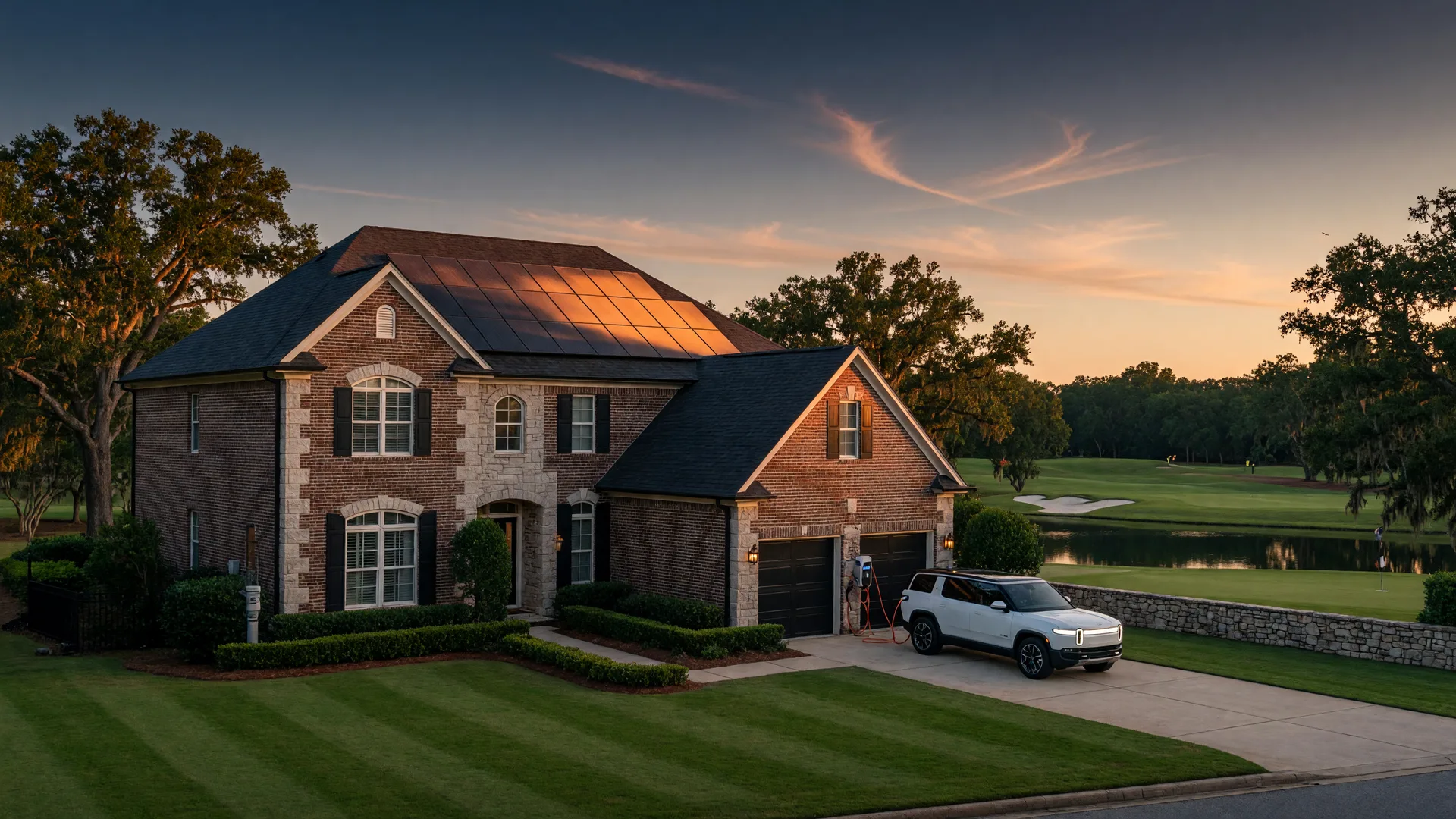
Yes for owned systems, no for leased ones, and the gap between the two is bigger than most homeowners realize. Research consistently shows that homes with solar panels they own sell for more, with SolarReviews' 2025 study of Zillow data putting the average premium near 6.9%, roughly $29,000 on a median-priced home. Electric vehicle chargers add a smaller but real bump and sell homes faster, while permanently installed backup generators carry value mainly in storm-prone regions like Georgia. Here is what the 2026 data shows, how it applies to Apalachee Farms, and which upgrades actually pay for themselves at resale.
As a luxury real estate specialist with 19 years selling in Apalachee Farms and 10 years living here, I have watched energy features move from a niche request to a standard showing question. Buyers touring $500K to $1.3M homes in Dacula and Gwinnett County are asking about panel ownership, charging capability, and backup power the way they once asked about granite and hardwood. This article pulls together the latest research, the Georgia-specific numbers, and the practical advice I give my own buyers and sellers.
Why Energy Upgrades Are This Year's Buyer Conversation
The search data is unmistakable. Zillow's 2026 trend analysis found climate and disaster-readiness keywords surging in listing descriptions: flood protection mentions up 64% year over year, defensible-space landscaping up 36%, fire-protection systems up 28%, and elevated homes up 26%. Realtor.com's 2026 forecast reached the same conclusion from a different angle, noting that buyers are focusing on how a home uses power, water, and natural light, with solar, EV charging, and smart thermostats at the center of the conversation.
These are practical, not ideological, searches. Energy features signal that a home is newer, better maintained, and cheaper to run, and in a community like Apalachee Farms they arrive with a lifestyle bonus: a home that already handles an electric car and a big energy bill fits the way many of today's buyers actually live. Georgia's economics reinforce the trend. Residential electricity here averages roughly 14 to 16 cents per kilowatt-hour, about 11% to 18% below the U.S. average, and the state is now a national hub for electric vehicle manufacturing, with more than $24 billion in announced EV investments expected to create 24,000-plus jobs.
What buyers are searching for and what appraisers can value are two different things, so the rest of this article separates the hype from the data, upgrade by upgrade.
SolarReviews' 2025 study of Zillow data across more than 400 home sales found homes with owned solar sold for about 6.9% more, roughly $29,000 on a median-priced home.
Zillow research ties sustainable features, including EV charging, to a 1.5% to 3.5% sale premium, and Realtor.com found Level 2-equipped homes sold 13% faster.
Battery storage now ships with 37% of new U.S. residential solar systems, per Lawrence Berkeley National Lab, and owned solar-plus-storage carries a premium similar to solar alone.
More than $24 billion in announced electric vehicle manufacturing investments is expected to create 24,000-plus jobs across Georgia, from Hyundai's Metaplant to Rivian's site outside Social Circle.
Solar Panels: The Best-Documented Premium
Solar has the strongest research backing of any energy upgrade. Zillow's long-running benchmark study found homes with solar sell for about 4.1% more. SolarReviews' 2025 study, built on Zillow data across more than 400 home sales, found an average premium near 6.9%, roughly $29,000 on a median-priced home. A SolarInsure study of 5,000 California sales from 2020 through 2023 found owned-solar homes sold 5% to 10% higher, up to about $79,000 for a typical system. Lawrence Berkeley National Lab's widely cited work pegs the premium at roughly $3.90 to $6.40 per installed watt, about $17,000 on a typical system.
The single most important caveat is ownership. Every major study agrees that leased or third-party-owned panels add little to no value, because the buyer inherits a monthly obligation instead of a benefit. Appraisers value owned systems with documented warranties, receipts, and production records. If you are shopping for a home with existing panels, ask the ownership question before you fall in love with the view.
Georgia's solar market is mature and its buyers are informed. The state ranks 10th nationally in installed solar capacity at about 7,675 megawatts as of mid-2026, solar supplies roughly 8% of Georgia's electricity, enough for about 905,000 homes, and the industry supports about 5,900 jobs across 238 companies, per SEIA. The financial picture is more conservative than the headlines: Georgia Power credits exported rooftop solar at 7.22 cents per kWh with no one-to-one net metering, and with below-average residential rates the typical payback runs roughly 10 to 14 years, before weighing the 30% federal tax credit. In other words, solar in Georgia is a long-game investment that also happens to lift resale value, which is exactly the profile that suits a community where homeowners stay a decade or more.
EV Chargers: Small Cost, Faster Sale
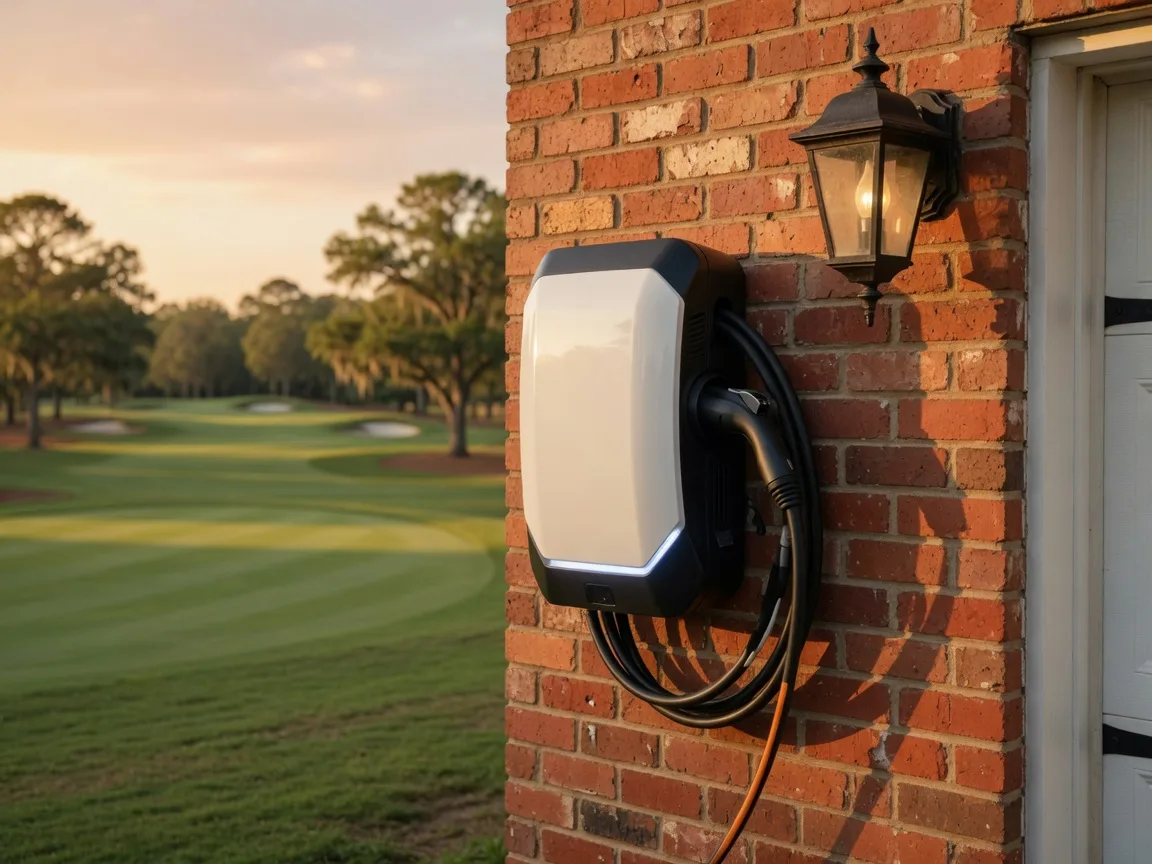
The electric vehicle charger is the quiet value play of 2026. Zillow research ties sustainable features, including EV charging, to a 1.5% to 3.5% sale premium depending on the market, and Realtor.com found that homes listing a Level 2 charger sold about 13% faster. A joint university study estimated that improved charging availability added roughly $17,700 in value, and a Nature Sustainability analysis found homes near charging infrastructure gained about 3.3%. For a few hundred dollars in hardware plus a licensed electrician's installation, that is an exceptional return.
The details matter. A hardwired Level 2 station counts as a permanent fixture that appraisers can include, while a 120-volt plug-in unit adds negligible value on its own. In listing photos, marketing copy, and the showing script, a wall-mounted charger reads instantly to buyers: this home is ready for an EV. That cue matters more every year in Georgia, where the vehicle-for-its-people manufacturing boom is visible from the highway.
Georgia now anchors a national EV corridor. Hyundai's Metaplant near Savannah already employs more than 4,000 people and is expanding, a $5 billion Hyundai-SK On battery plant in Bartow County began production in summer 2026 with about 3,500 jobs, and Rivian's $5 billion plant outside Social Circle, roughly half an hour from Dacula, broke ground in September 2025 with 7,500 jobs targeted. Buyers moving in from those plants and from metro Atlanta's commuter belt increasingly ask one question at the garage door: where do I plug in?
Backup Power: Generators and Batteries
When Hurricane Helene swept through Georgia in late September 2024 and left more than a million customers without power, some for days, the standby generator went mainstream in this market. The value math is regional: Angi cites a conservative 2% to 3% resale bump for a whole-home generator, while industry sources cite 3% to 5%, and the premium is highest where outages are most common. Only a permanently installed, automatic standby unit counts toward appraised value; portable generators add none, though they are always worth mentioning to a buyer skeptical of storm season.
Battery backup is the fastest-growing piece of the puzzle. Battery storage now ships with 37% of new U.S. residential solar systems, per Lawrence Berkeley National Lab, and an owned solar-plus-storage system carries a premium similar to owned solar alone. Standalone battery-only installs have thinner valuation data, so treat them as comfort and resilience first, resale value second.
For buyers, the practical question is not whether generators and batteries pay for themselves dollar for dollar. It is whether the home can keep power running through a Georgia storm, because that is the feature people are actually searching for. For sellers, maintenance records and a transferable warranty turn a generator from an invisible box in the yard into a documented asset. Georgia insurance costs are a rising conversation in their own right, and the resilience features that keep a home protected during storms are increasingly part of that story.
Zillow's long-running study found 4.1%; SolarReviews' 2025 study put the average near 6.9%. Berkeley Lab pegs the value at roughly $3.90 to $6.40 per installed watt.
Buyers pay for owned systems. A lease transfers a monthly obligation, so appraisers typically assign it little to no resale value unless the new owner can take over or buy it out.
A permanent, hardwired Level 2 charger counts as a fixture and sells homes about 13% faster. A 120-volt plug-in unit adds negligible value on its own.
Angi cites a conservative 2% to 3% bump; industry sources go higher. Value is highest where outages are common. Only a permanently installed standby unit counts; portable units add no appraised value.
Batteries accompany 37% of new U.S. residential solar installs, and an owned system with storage values much like owned solar alone. Standalone battery-only installs have thinner valuation data.
What This Means in Apalachee Farms
Apalachee Farms spans about 587 homes across five sections, from entry-level pricing in The Terraces to the premier golf-front estates of The Oaks, and energy features land differently at each price point. In The Terraces and Riverside, where buyers compare listings against new construction and resales across Dacula and Buford, a documented owned solar system or a hardwired charger helps a resale compete with builder inventory that often includes these features as standard. In Clubview and The Oaks, the buyers are relocation executives, downsizers, and golf lifestyle purchasers who expect a turnkey home, and energy-readiness is part of that expectation.
For sellers, the advice is to document before you market. Dig out the solar purchase paperwork or lease agreement, the transferable warranties, the inverter and panel ages, and the generator service records, and hand them to your agent before the listing goes live. Feature the charger in photos and call it out in the description, because buyers filter for it. If you lease a system, have the payoff number and monthly payment ready so negotiations do not stall over an unknown.
For buyers, add three questions to every tour: is the solar owned or leased, how old are the panels and inverter, and is the charger hardwired? Then confirm community rules before planning new upgrades, since HOA covenants vary by neighborhood. Pair the energy conversation with the other pieces of Georgia ownership that keep coming up at closing: rising homeowners insurance, storm resilience, and what an accessory dwelling unit might add in value. The smartest buyers treat energy features as part of the whole owning picture, not a checklist item.
Five Questions to Ask Before You Upgrade
Owned or leased?
Only an owned system builds resale value. If you lease, the buyer will likely ask you to transfer the lease, buy it out, or credit the sale for the remaining obligation.
What does your community allow?
Confirm the HOA covenants and any local rules before you plan panels, a charger, or a generator. Rules vary by community, so read the docs rather than assume.
How long will you stay?
With Georgia's current power rates and buyback credit, a typical solar payback runs roughly 10 to 14 years. If you plan to stay that long, the savings compound; if you may sell sooner, the resale premium still helps.
Can you document the system?
Receipts, the transferable warranty, panel and inverter age, ownership paperwork, and any production records give appraisers what they need to assign value.
Is the charger hardwired?
A wall-mounted, hardwired Level 2 charger is a permanent fixture an appraiser can count. A cord-and-plug unit hidden in a garage cabinet is harder to value.

Lisa's Perspective on Energy Upgrades
"I have sold in Apalachee Farms for 19 years and lived here for 10, and I have watched 'does it have solar' go from a rare question to a standard one. My advice is the same for every client: own it, document it, and keep it simple. An owned system with clean paperwork is an asset a buyer can touch and verify; a lease with surprise terms is a negotiation. And the cheapest upgrade on the list, a hardwired charger, is often the one that wins the showing. You do not need every gadget. You need the ones a future buyer can see, verify, and value."
Frequently Asked Questions About Energy Upgrades and Home Value
Do solar panels increase home value in Georgia?
Yes, when you own them. Zillow's benchmark study found solar homes sell for about 4.1% more, and SolarReviews' 2025 study of more than 400 sales put the average premium near 6.9%, roughly $29,000 on a median-priced home. Georgia buyers are solar-literate, since the state ranks 10th nationally in installed capacity and solar now supplies about 8% of the state's electricity. The catch is ownership: leased, third-party-owned systems add little to no appraised value, so the strongest premium goes to homes with owned, documented panels.
Are solar panels worth it in Georgia in 2026?
It depends on how long you will stay. Georgia's residential rates run roughly 14 to 16 cents per kilowatt-hour, about 11% to 18% below the U.S. average, which keeps the savings pool smaller than in states like California. Georgia Power credits exported rooftop solar at 7.22 cents per kWh with no one-to-one net metering, so installers and analysts describe a typical payback of roughly 10 to 14 years before the 30% federal tax credit is even the whole story. For long-term owners and for resale value, owned solar still works; for a short stay, the premium may not justify the upfront cost.
Does an EV charger add value to my home?
Yes, and it is one of the cheapest permanent upgrades you can make. Zillow research ties sustainable features, including EV charging, to a 1.5% to 3.5% premium, and Realtor.com found homes with Level 2 chargers sold about 13% faster. A university study estimated charging availability added roughly $17,700 in value. The key is a hardwired Level 2 station, which counts as a fixture; a 120-volt plug-in unit adds little. With Georgia's EV manufacturing corridor growing, charging is becoming a standard question at showings.
Does a whole-home generator increase home value?
It can, especially in Georgia. When Hurricane Helene tore through the state in late September 2024, more than a million customers lost power, some for days, and standby generators went from nice-to-have to must-have for many buyers. Angi cites a conservative 2% to 3% resale bump, while industry sources cite 3% to 5%, and value is highest where outage risk is highest. Only a permanently installed, automatic standby unit counts toward appraised value; portable generators add none. The generator also needs to be maintained and documented to hold its value.
Do leased solar panels hurt a sale?
They rarely add appraised value, and they can slow a sale if the lease terms surprise the buyer. Buyers typically respond in one of three ways: they take over the lease, the seller buys it out before closing, or the seller credits the buyer for the remaining obligation. Sellers who disclose the lease terms, the monthly payment, and the payoff number up front get smoother negotiations. If you finance a system through a loan you fully own, that is different from a third-party lease, and owned systems are the ones appraisers value.
Which energy upgrades should a seller make before listing in Apalachee Farms?
Start with documentation rather than new construction. If you own solar or have a generator, gather the receipts, the transferable warranties, and the service records before your agent writes the listing copy. Add a hardwired Level 2 EV charger if your garage does not have one, since the cost is modest and the faster-sale data is real. Only then consider bigger moves, like a generator, and price them against what homes in your section actually sell for. In a $500K to $1.3M community like Apalachee Farms, buyers interpret a well-documented, energy-ready home as a well-maintained home, and that perception lifts offers.
Wondering What An Upgrade Is Worth in Your Section?
Lisa Harris combines nearly 20 years of Apalachee Farms market knowledge with real comparable sales data for every section of the community. Whether you are a buyer weighing a home with solar or a seller deciding which upgrades to make before listing, she can show you what the numbers say for your exact situation.
Lisa Harris, MBA, CLHMS GUILD
Lisa Harris is a CLHMS GUILD Certified Luxury Home Marketing Specialist serving Apalachee Farms, Dacula, and Northeast Metro Atlanta's premier golf course and country club communities. With nearly 20 years of experience, an engineering degree, and an MBA, she provides buyers and sellers with data-driven insight, section-level market knowledge, and strategic negotiation expertise. Her work has been featured in RISMedia, Realtor.com, Inc. magazine, and Atlanta News First.
Information believed to be accurate but not guaranteed. Home value research sourced from Zillow's 2026 trend analysis (flood protection mentions up 64%, defensible space up 36%, fire protection up 28%, elevated homes up 26%), SolarReviews 2025 Zillow-data study, SolarInsure 2025 study, Lawrence Berkeley National Laboratory, Zillow Research, Realtor.com, Nature Sustainability, and Angi. Georgia solar data sourced from SEIA (state profile updated June 2026); Georgia Power export credit and payback estimates sourced from Georgia installers and analysts including IntegrateSun and Palmetto. EV industry figures sourced from AP, InsideEVs, and industry reporting. Georgia rate data sourced from EIA-based residential averages reported by Palmetto and ElectricChoice. Figures are estimates and vary by system age, ownership, section, and market conditions. Contact Lisa Harris for current market information and to verify HOA covenants and property details.